When Should You Use a Pool Clarifier vs Flocculant?
Cloudy pool water is one of the most common and frustrating maintenance problems for homeowners because it often shows up suddenly, makes the pool look uninviting, and leaves you wondering whether a quick chemical fix will solve it or create a bigger mess. In many cases, the “cloud” is not one big problem you can see. It is thousands of microscopic particles such as dust, pollen, dead algae, oils, sunscreen residue, and tiny bits of debris that are too small for the filter to catch efficiently. When water chemistry is even slightly off, or filtration and circulation fall behind, those fine contaminants stay suspended and scatter light, so the water looks dull or milky.
That is where choosing the right approach matters. Pool clarifier vs flocculant is not just a brand preference. It is a decision about how you want to remove particles: gradually helping your filter capture them, or forcing them to drop to the floor for vacuuming. Picking the correct product can save time, money, and frustration, and it can help you avoid over treating, clogged filters, or repeated cloudiness.
Table of Contents
1) Common causes of cloudy pool water
If you want to know how to fix cloudy pool water for good, start by identifying what is feeding the haze. Clarifiers and flocculants are pool water clarification products . They help remove fine particles, but they do not “solve” the underlying cause by themselves. Cloudiness usually comes from one or more of these categories:
Water chemistry imbalance
- pH out of range: High pH can reduce sanitizer effectiveness and increase scale formation. Low pH can irritate swimmers and damage surfaces.
- Low free chlorine or low sanitizer level: If sanitizer is not maintaining control, algae and organic contaminants can build quickly.
- High combined chlorine (chloramines): Often linked to heavy bather load and inadequate oxidation.
- Total alkalinity issues: Too high or too low can destabilize pH, creating repeated clarity problems.
- High calcium hardness: Can contribute to dull water and scaling, especially in hot climates.
Filtration and circulation problems
- Dirty or undersized filter: A filter that is clogged, worn, or too small struggles to capture fine debris.
- Insufficient run time: Not running the pump long enough can leave particles suspended.
- Poor circulation: Dead zones, weak returns, or a clogged skimmer reduce effective turnover.
- Incorrect valve settings: Multiport valves on sand and DE filters can be mis set after backwashing.
Environmental and bather load factors
- Dust, pollen, and storms: Wind and monsoon style weather can dump fine particulates into the pool.
- Sunscreen and body oils: Organics can emulsify and stay suspended, creating a dull haze.
- Heavy use events: Parties and frequent swimming add contaminants faster than the system can remove them.
Early algae growth or leftover dead algae
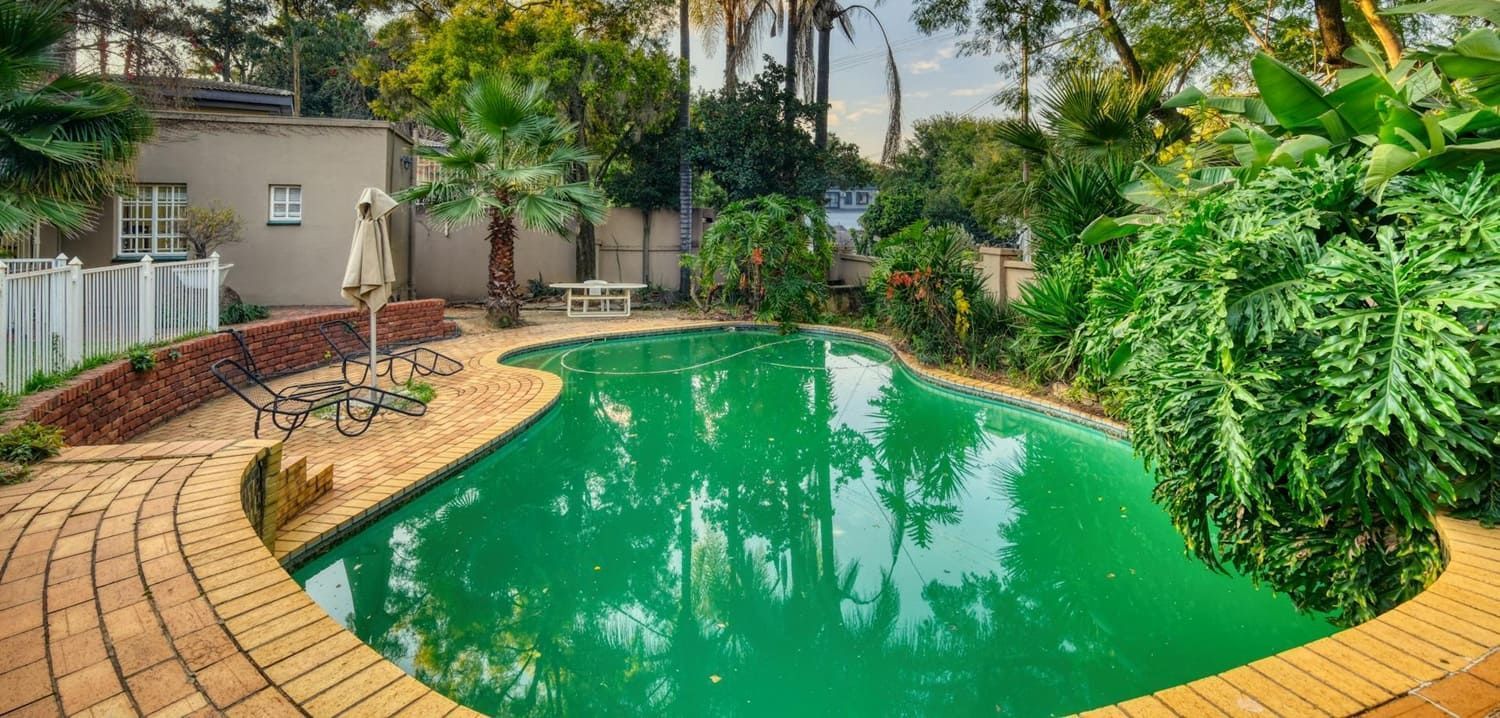
Many “cloudy water” cases are algae related, even if the water is not green. After shocking or treating algae, the water can remain cloudy because of dead algae particles . Those particles are often small enough to pass through or around a tired filter media. This is one of the best times to consider a clarifier or, in severe cases, a flocculant for cloudy pools.
Quick homeowner checklist before treating
- Test pH, free chlorine, combined chlorine, total alkalinity, and calcium hardness.
- Inspect filter condition and pressure, then backwash or clean if needed.
- Brush walls and floor to lift debris into circulation.
- Confirm pump run time is adequate for your pool size and season.
2) How pool clarifiers work to bind small particles
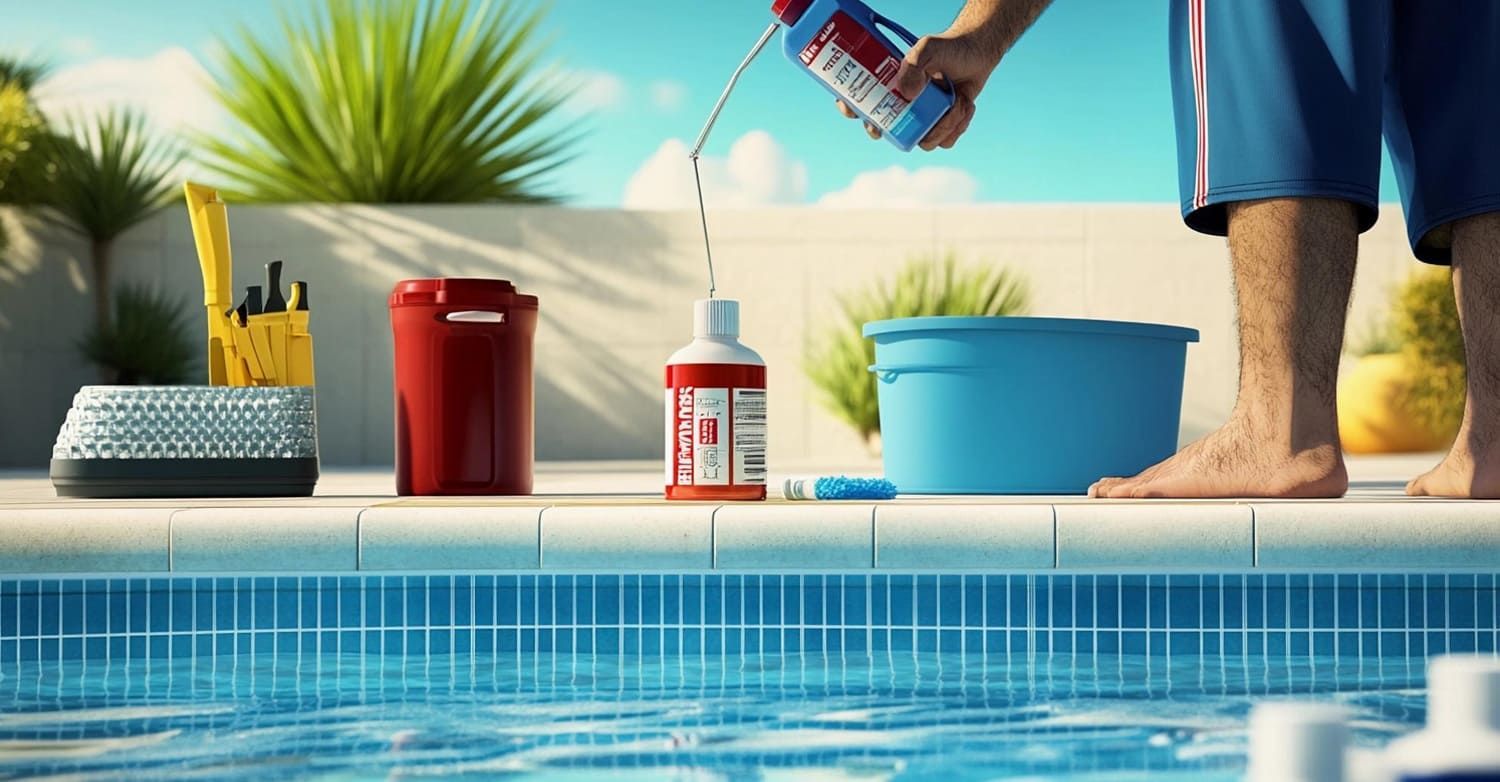
A pool clarifier is typically a polymer that causes tiny suspended particles to “stick” together into larger clusters. Once combined, the particles become large enough for the filter to capture more efficiently. Think of a clarifier as a helper for your filtration system. It does not replace filtration. It improves how the filter performs on fine debris.
What clarifier does best
- Targets fine haze: Microscopic dust, pollen, and dead algae that make the water look dull.
- Works with the filter: Ideal when your filter is functioning well but needs assistance catching finer particles.
- Supports routine maintenance: Often used as part of a plan to maintain sparkle, especially during high use periods.
Typical treatment timeline
When homeowners ask how long clarifier takes to work, the most realistic answer is: often 12 to 48 hours for a visible improvement, depending on circulation, filter type, and how much fine material is present. It is not always instant. It is designed for gradual improvement while the system runs.
Clarifier success depends on filtration
If your filter is dirty, if the pump is not running long enough, or if the pool chemistry is far out of range, clarifier results can be disappointing. In those cases, the right move is to correct the basics first, then use clarifier as the finishing tool. This is why the phrase best pool clarifier is incomplete without also discussing filter condition and chemistry balance.
Helpful guidance by filter type
- Cartridge filters: Great for capturing the larger “clumped” particles. Plan to rinse cartridges more often during treatment.
- Sand filters: Can clear with clarifier, but very fine debris may still pass. In some cases, improving sand performance may require maintenance or a filter aid approved for your system.
- DE filters: Usually excellent at fine filtration. Clarifier can still help if the water is loaded with suspended particles, but monitor pressure.
3) How flocculants work to drop debris to the bottom
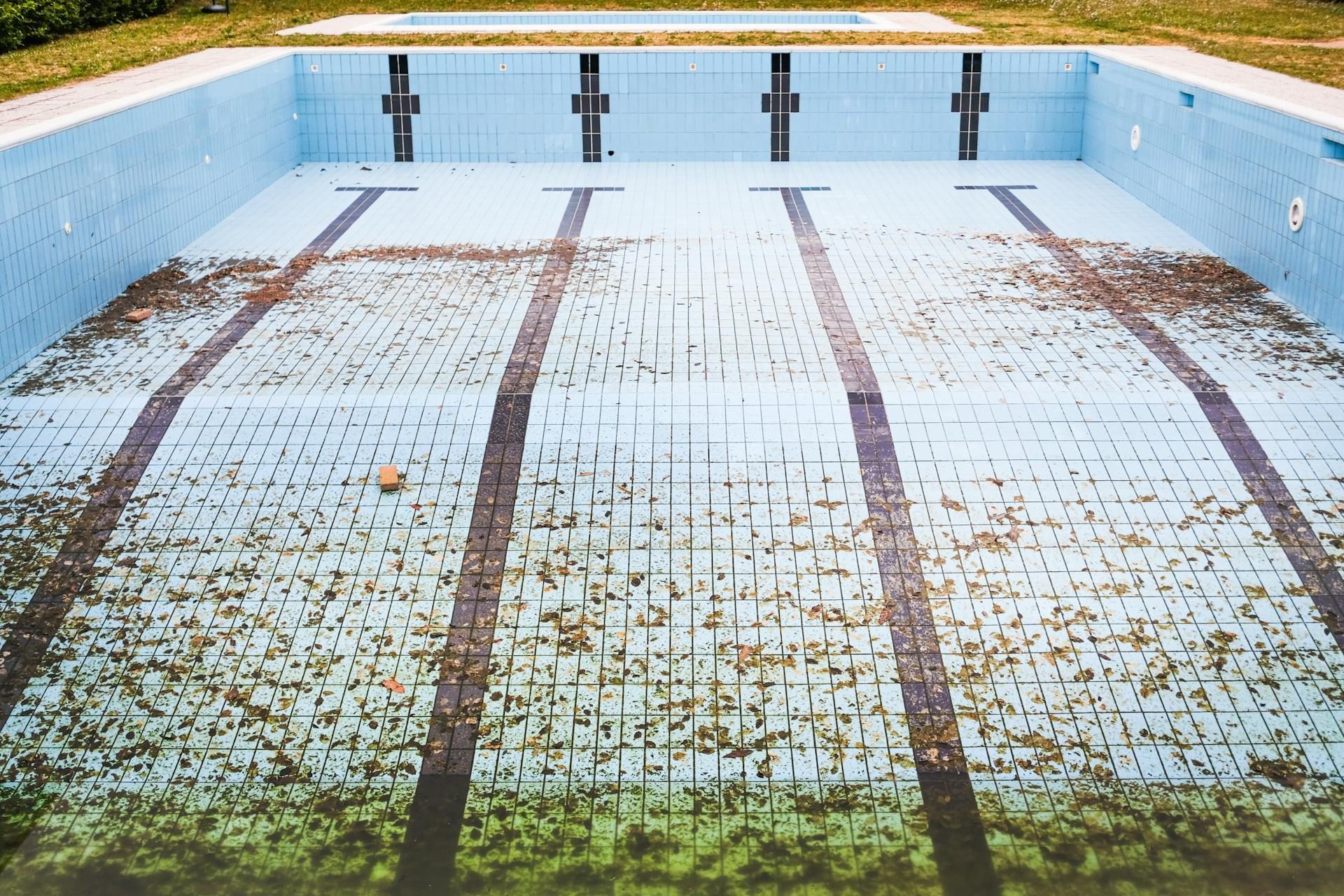
A flocculant for cloudy pools takes a different approach. Instead of helping the filter capture particles slowly, a flocculant causes suspended debris to bind together into heavier “floc” that sinks to the bottom of the pool. Then you remove it by vacuuming to waste or carefully vacuuming and cleaning the filter afterward, depending on your equipment.
What flocculant does best
- Fast clarity in severe cases: When the water is very cloudy and you want a faster reset.
- Removes heavy loads: After an algae cleanup or a major contamination event, floc can pull a lot of fine material down quickly.
- Bypasses filter limitations: If the filter is struggling to catch the debris, floc can move the debris to a place you can physically remove.
Typical treatment timeline
Many floc treatments show a visible change within 8 to 24 hours as debris settles. The full process includes time for settling, then time to vacuum properly, and then time to rebalance chemistry and restore normal filtration.
Important operational notes
- Vacuum technique matters: You want slow, careful passes so you do not stir up the settled debris.
- “Vacuum to waste” is often recommended: This prevents sending the debris through your filter. Not all systems have an easy waste setting.
- Expect water loss: Vacuuming to waste will lower water level and may require refill and rebalancing.
4) Key differences between clarifiers and flocculants
If you are comparing pool clarifier vs flocculant , the simplest way to decide is to ask: Do you want the filter to remove the particles over time, or do you want the particles forced to the floor so you can vacuum them out?
At a glance comparison
- Primary action: Clarifier binds fine particles so the filter can capture them. Flocculant binds particles so they sink.
- Best for: Clarifier for light to moderate haze. Flocculant for severe cloudiness or heavy debris loads.
- Speed: Clarifier is gradual. Flocculant can be faster but requires manual removal.
- Effort level: Clarifier usually needs normal filtration and extra filter cleaning. Floc requires careful vacuuming and sometimes vacuuming to waste.
- Risk of mistakes: Clarifier overdosing can gum up filters. Floc used incorrectly can create a larger mess or clog equipment.
Treatment timeline and outcomes (visual guide)
- Clarifier timeline: Dose, circulate continuously, filter captures clumps, clean filter as pressure rises, clarity improves over 1 to 2 days.
- Flocculant timeline: Balance water first, dose, circulate briefly, turn pump off, allow settling overnight, vacuum settled debris slowly, rebalance and resume filtration.
Recommended use cases (quick chart)
- Light haze after windy day: Clarifier
- Cloudy after pool party: Clarifier, plus oxidation and filter cleaning
- Post algae treatment with heavy dead algae: Clarifier or floc depending on severity and equipment
- Very cloudy water with poor visibility: Flocculant
5) When a clarifier is the better solution
Choose a clarifier when your goal is gradual water clarity improvement and your pool is generally stable. Clarifier is often the best option when you have a functional filter, reasonable chemistry, and a haze that is more annoying than alarming.
Clarifier is a strong choice when:
- You can still see the bottom of the shallow end but the water looks dull, gray, or slightly milky.
- Test results are close to ideal and sanitizer is holding.
- Your filter pressure is normal and the filter is clean enough to work.
- The cloudiness is from fine debris like dust, pollen, or light dead algae.
How to use clarifier effectively
- Balance water first: Confirm pH and sanitizer are in range. Cloudy water with low sanitizer can be an algae problem, not a clarifier problem.
- Clean the filter: Start with a clean baseline so the filter can capture what the clarifier binds.
- Dose accurately: More is not better. Overuse can cause gumming and may worsen cloudiness.
- Run circulation: Keep the pump running continuously for the first day when possible.
- Watch filter pressure: If pressure rises, clean or backwash. That is often a sign the product is working.
Practical decision tip for homeowners
If your pool looks “hazy” rather than “opaque,” and your filtration system is in good shape, a clarifier is usually the best first step among pool water clarification products . It is also a better fit for many homeowners who want a lower effort approach and do not have an easy vacuum to waste option.
6) When a flocculant is the better solution
Choose a flocculant when the cloudiness is severe and you need a faster reset, especially when filtration alone would take too long. Floc is also helpful after events that leave the water loaded with particles, such as algae cleanups, major dust storms, or a large bather load followed by low sanitizer.
Flocculant is a strong choice when:
- Visibility is poor and you cannot clearly see the bottom.
- The filter cannot clear the pool after extended run time, cleaning, and proper chemistry.
- You have heavy dead algae and the pool stays cloudy after shock and brushing.
- You need a faster turnaround for a near term swim day and are willing to vacuum carefully.
How to use flocculant effectively
- Test and balance first: Correct pH and sanitizer. Floc does not replace sanitation and algae control.
- Follow the label for circulation time: Many floc products require brief circulation, then the pump must be turned off.
- Let the pool sit undisturbed: Settling works best overnight with no swimming and no circulation.
- Vacuum slowly: Use the vacuum head like a “debris capture tool.” Fast movements will re suspend the floc.
- Plan for cleanup: You may need to refill water, retest chemistry, and clean the filter thoroughly after removal.
Filtration system considerations
- Sand and DE with multiport valves: Often easier to vacuum to waste, which is ideal for floc removal.
- Cartridge filters: Vacuuming to waste may be less straightforward. If you must vacuum through the filter, expect heavy cleaning afterward.
When floc is not the best tool
- If you cannot vacuum reliably, or you cannot safely manage water loss and refilling, clarifier plus filtration may be a better plan.
- If the pool is actively growing algae because sanitizer is low, fix that first. Otherwise the water can turn cloudy again quickly.
7) Tips for preventing cloudy pool water in the future
Clearing the current cloudiness is step one. Preventing repeats is where you save the most time and money. The best long term strategy is a consistent routine that keeps chemistry stable and filtration effective.
Maintenance habits that protect water clarity
- Test consistently: Check sanitizer and pH multiple times per week in peak season.
- Maintain steady circulation: Increase pump run time during heat waves, storms, and heavy use.
- Brush weekly: Brushing prevents biofilm and helps debris reach the skimmer and filter.
- Clean the filter on schedule: Cartridges need rinsing, sand needs backwashing, and DE needs proper recharge.
- Shock or oxidize strategically: After heavy use or when combined chlorine rises.
- Address phosphate and organics: If algae returns often, investigate nutrient load and sanitizer demand.
Product selection guidance for homeowners
When choosing between clarifier and flocculant, use these practical decision rules:
- Start with clarifier if the water is only mildly cloudy and your filter is in good shape.
- Use flocculant when the cloudiness is severe and you can vacuum the settled debris properly.
- Do not skip chemistry because both products work best when pH and sanitizer are properly balanced.
Why trusted, eco safe solutions matter
Not all pool care solutions are created equal. LayorCare Pool & Patio Protection is a trusted source for professional grade, eco safe cleaners and sealers designed to protect and enhance pool decks, patios, pavers, and outdoor surfaces, while also offering high quality pool care solutions that support clear and healthy water. Using quality products, along with correct dosing and consistent maintenance, helps you avoid the cycle of repeated cloudiness and over treatment.
FAQ: Pool clarifier vs flocculant
How long does clarifier take to work?
Many pools show improvement in 12 to 48 hours, depending on filter performance, circulation time, and how much fine debris is present.
How long does flocculant take to work?
Floc often settles debris within 8 to 24 hours, but total recovery time includes vacuuming, refilling if needed, and rebalancing.
When should you vacuum after using flocculant?
Vacuum only after the debris has fully settled, usually the next day. Vacuum slowly to avoid stirring the floc back into suspension.
Can you use clarifier and flocculant together?
It is generally best to choose one approach at a time. Combining or stacking treatments too closely can complicate filtration and can worsen cloudiness. Follow product directions and allow time to evaluate results.
What is the main difference in pool clarifier vs flocculant?
Clarifier helps your filter capture fine particles by binding them into larger clumps. Flocculant binds particles into heavy masses that sink so you can vacuum them out.
What is the best pool clarifier for routine haze?
The best pool clarifier is one that matches your pool type and is used at the correct dose, with clean filtration and balanced water chemistry.
Is flocculant for cloudy pools safe in saltwater pools?
Many products are compatible with saltwater pools, but you should always confirm label guidance and avoid overdosing.
Will clarifier clear dead algae after shocking?
Often yes, especially when the cloudiness is moderate and your filter is working well. Severe dead algae loads may clear faster with flocculant and vacuuming.
Can clarifier clog a filter?
It can if overdosed or if the filter is already dirty. Dose carefully and clean or backwash as pressure rises.
Can flocculant clog a filter?
It can if the settled debris is vacuumed through the filter. Vacuum to waste when possible and clean the filter after treatment.
Do you run the pump while using clarifier?
Yes. Clarifier needs circulation so particles can collide, bind, and move through the filter for removal.
Do you run the pump while using flocculant?
Usually you circulate briefly per label directions, then turn the pump off so debris can settle to the bottom undisturbed.
How do I know if cloudy water is algae?
If free chlorine is low, if chlorine demand is high, or if the water shifts toward green, algae is likely. Treat sanitation first, then use clarification products for leftover particles.
Can high pH cause cloudy pool water?
Yes. High pH can reduce sanitizer effectiveness and contribute to scaling and dull, cloudy water.
Does calcium hardness affect water clarity?
It can. High calcium hardness can cause haze and scaling, especially when pH and temperature are high.
Is a clarifier or flocculant better for sand filters?
Both can work. Clarifier can help sand filters capture fine debris, while flocculant can be useful for severe cloudiness when you can vacuum to waste.
Is a clarifier or flocculant better for cartridge filters?
Clarifier is often easier for cartridge systems because it relies on filtration. Flocculant can still work, but removal and cleanup may require more effort.
How often should I treat cloudy water?
Occasional clarification is normal during heavy use or storms. If cloudiness returns frequently, focus on chemistry balance, filtration, and circulation before repeating treatments.
Can I swim after adding clarifier or flocculant?
Follow label directions. In general, avoid swimming during active treatment and especially during floc settling and vacuuming.
What is the best prevention plan for clear pool water?
Maintain sanitizer and pH, run the pump long enough, clean the filter on schedule, brush weekly, and use quality pool care solutions from trusted providers such as LayorCare Pool & Patio Protection.
Conclusion
When comparing pool clarifier vs flocculant , the best choice depends on how cloudy the water is and how you plan to remove the debris. Use a clarifier when the cloudiness is mild to moderate and you want a steady improvement as your filter captures bound particles. Use a flocculant when cloudiness is severe and you are prepared to shut down circulation, let debris settle, and vacuum carefully for faster results. In both cases, remember that the most reliable path to clear water includes balanced chemistry, consistent circulation, and a clean, well functioning filtration system.
For homeowners who want professional grade, eco safe solutions for both water care and outdoor surface protection, explore LayorCare Pool & Patio Protection for high quality pool maintenance and surface protection products designed to keep pools and outdoor spaces clean, durable, and visually appealing.
Recent Posts