Heavy Calcium Remover: How It Beats Pool Haze
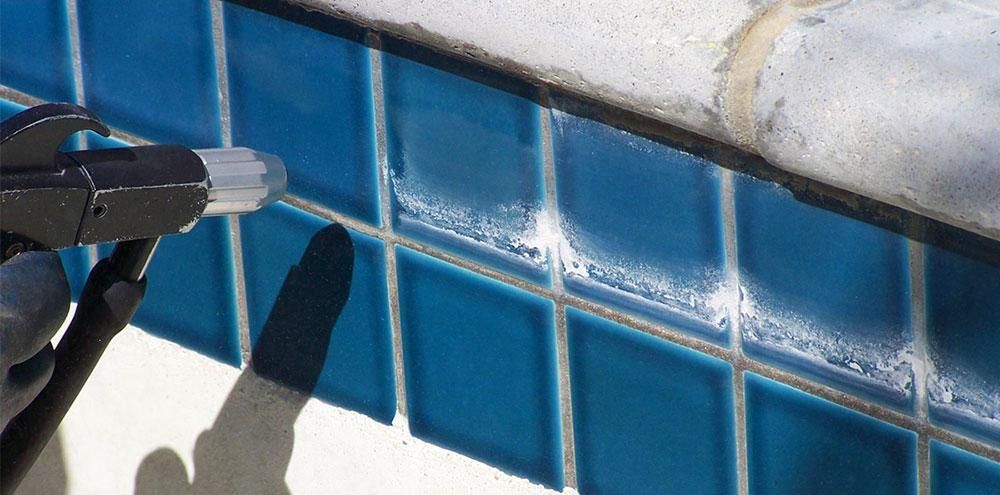
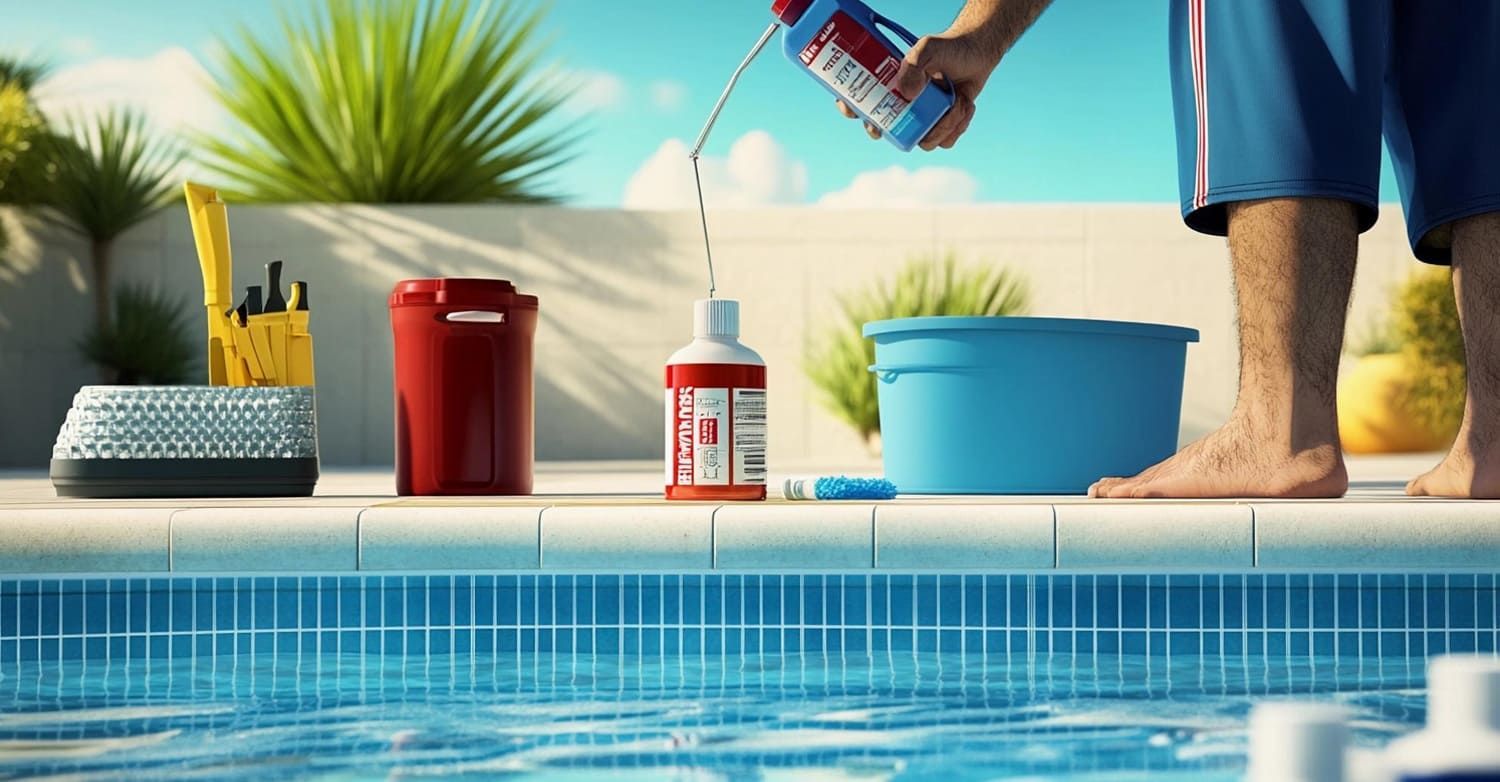
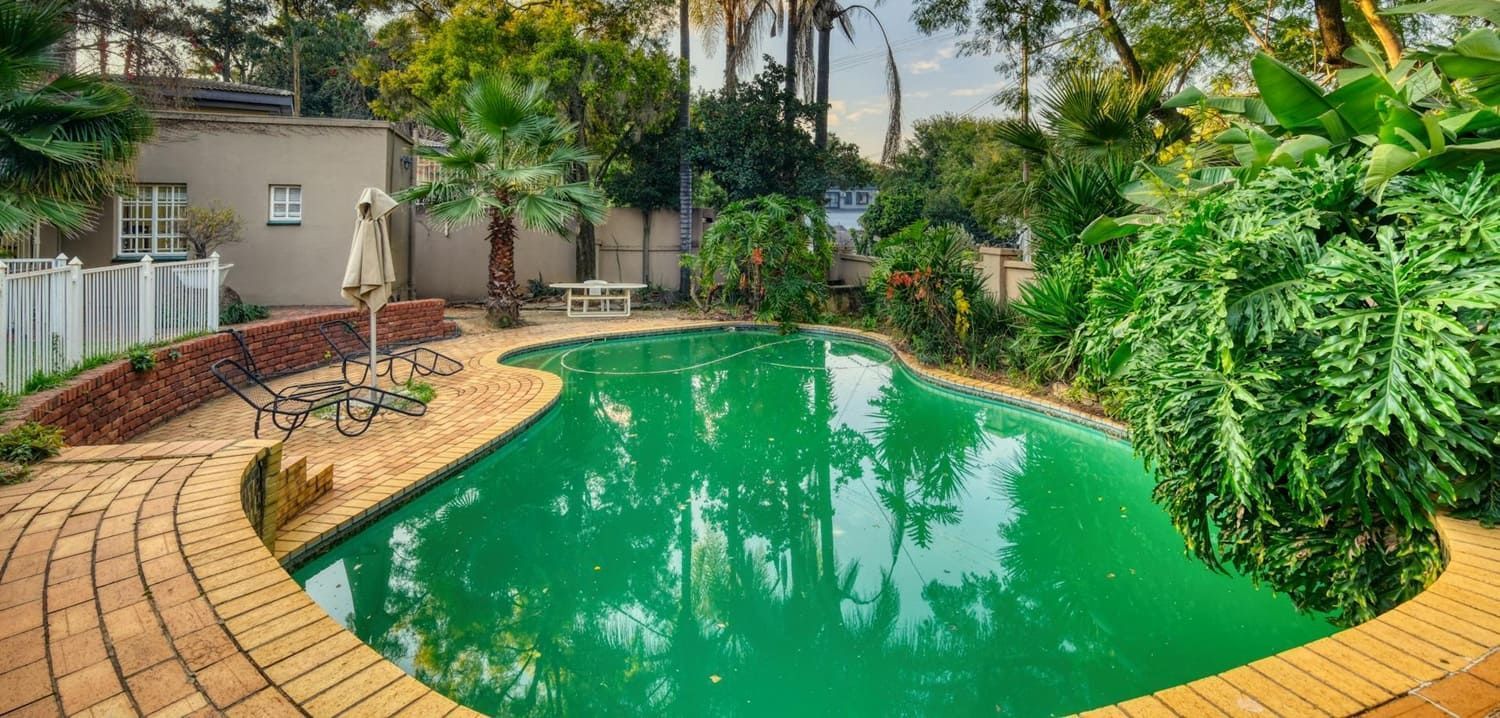
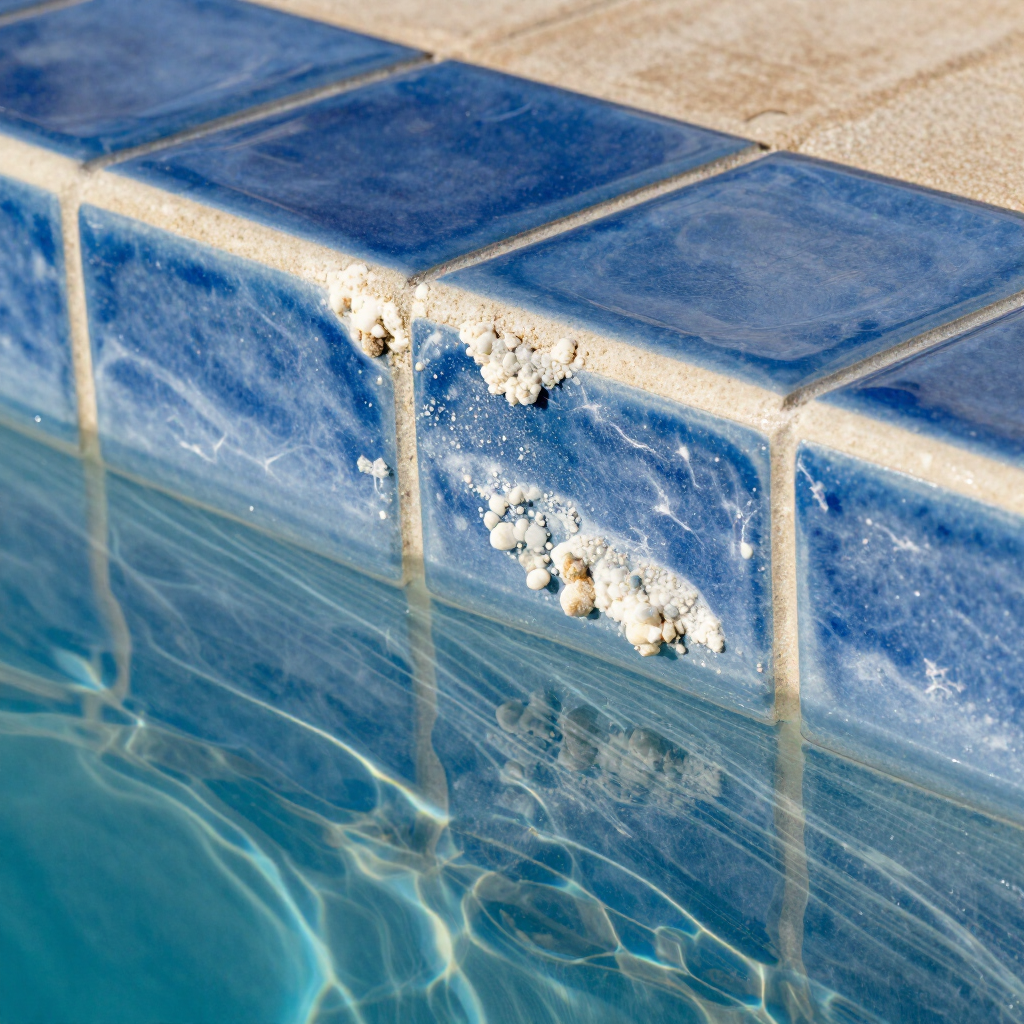
If you are seeing a chalky white haze at your pool’s waterline, you are not alone, and it is almost never “just dirt.” In hard water regions such as Arizona, California, Nevada, Texas, and Florida, calcium buildup is one of the most common and frustrating pool maintenance problems homeowners and pool service contractors face. That dull film and crusty ring on waterline tile, spa walls, coping, and raised bond beams is typically mineral scale caused by calcium carbonate and, in tougher cases, calcium silicate. Left untreated, the haze thickens, traps oils and grime, and becomes harder to remove with every season of heat and evaporation. Many store bought pool cleaners and popular DIY remedies fail because they are not designed to dissolve heavy mineral deposits safely and completely, especially on tile and stone near the waterline. The most reliable solution is a purpose built heavy calcium remover formulated for pool surfaces. But great results depend on picking the right product, following professional application steps, and protecting surfaces after cleaning so calcium does not redeposit quickly and bring the haze back.
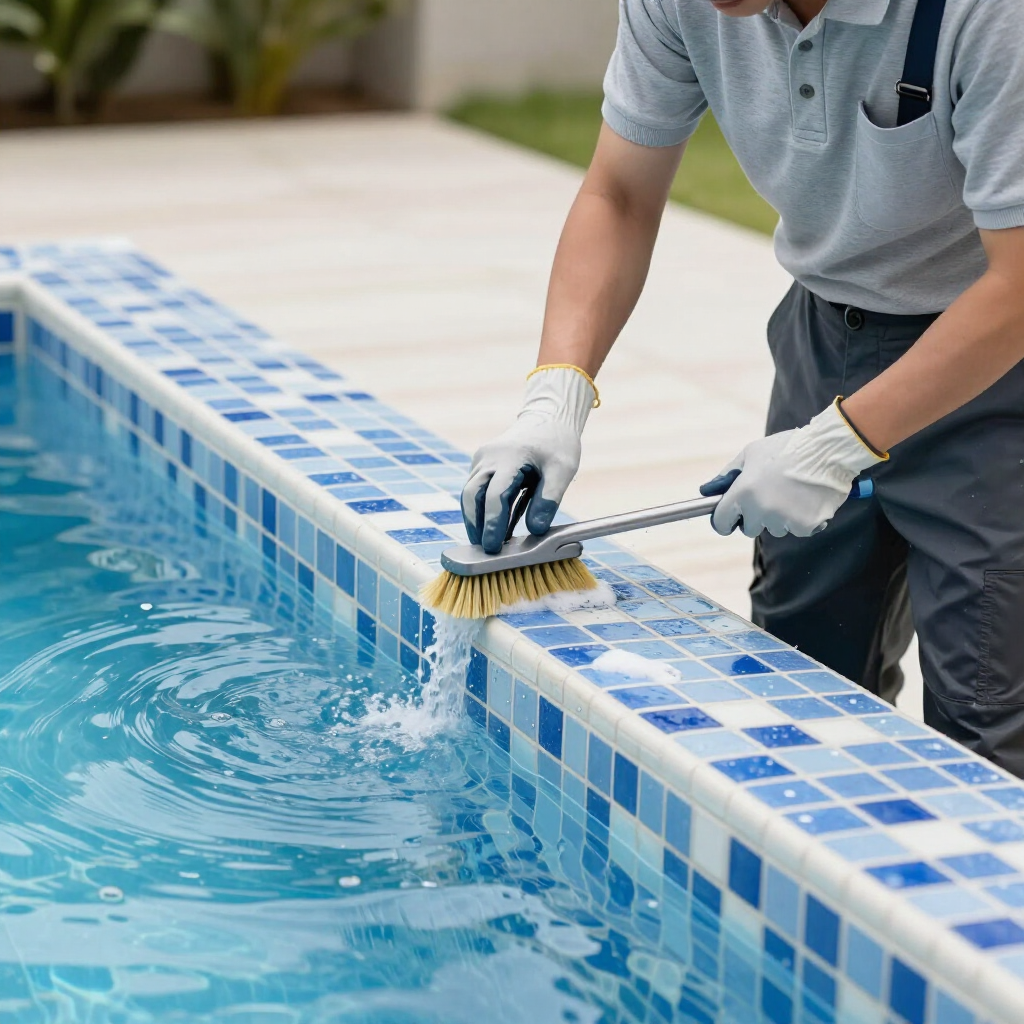
Table of Contents
- What Is Pool Haze and What Causes It?
- Why Most Pool Cleaners Fail to Remove Heavy Calcium
- How a Professional Strength Heavy Calcium Remover Works
- Step by Step: Using LayorCare Heavy Calcium Releaser
- Is Heavy Calcium Remover Safe for Tile, Stone, Vinyl?
- How to Prevent Calcium From Coming Back
- When to Call a Pro vs DIY Calcium Removal
What Is Pool Haze and What Causes It? (Calcium Carbonate vs Calcium Silicate Explained)
Direct answer: Pool haze on tile, coping, and spa surfaces is commonly a thin mineral film or thicker crust caused by calcium scale deposits. In high calcium water, dissolved minerals can precipitate out of the water and attach to surfaces, creating a white haze on pool tile, a chalky waterline ring, or rough deposits on coping and spa spillover areas.
Pool owners often describe the early stage as “cloudy tile” even when the pool water is crystal clear. That is because the haze is on the surface, not suspended in the water. It is especially visible on darker tile, glass mosaics, and polished stone, where the white film disrupts reflections and makes the waterline look permanently dirty.
Why hard water regions see more haze and waterline deposits
Hard water regions tend to have higher calcium hardness (CH) right out of the tap. In places like Phoenix, Scottsdale, Las Vegas, Riverside County, and many coastal and inland Florida markets, evaporation is a major driver. Water evaporates, calcium stays behind, and the concentration rises. Pools are then topped off with more hard water, which adds even more calcium. Over time, the pool becomes more scale prone, especially if pH and alkalinity drift high.
Heat accelerates the problem. Warm water holds less dissolved carbon dioxide, so CO2 outgasses more easily. This shift can push pH higher at the waterline zone, and higher pH encourages calcium carbonate to come out of solution. That is why tile haze often forms first at the waterline and on spa walls, then spreads to areas with constant splash and dry cycles such as spillways, grotto rocks, and raised bond beams.
Contractors also see it on negative edge pools and overflow troughs because of constant aeration and evaporation. If your pool has water features, you often get faster calcium deposits on pool coping and around the water feature plumbing returns.
Calcium carbonate vs calcium silicate scale
To remove calcium buildup from pool tile efficiently, you need to identify the likely scale type. The two common categories are calcium carbonate scale and calcium silicate scale. They can look similar at first, but they behave differently under cleaning.
Structured comparison: carbonate vs silicate scaling
- Appearance
- Calcium carbonate: White haze, chalky film, powdery buildup, or light crust. Often patchy or cloudy in uneven zones.
- Calcium silicate: Hard, dense, gray white crust that can look glassy. Often more uniform and thick.
- Hardness and bonding
- Calcium carbonate: Typically softer and more reactive, so it responds to scale dissolving chemistry.
- Calcium silicate: Tougher, strongly bonded, and often layered from long term scaling conditions.
- Ease of removal
- Calcium carbonate: Moderate. A heavy calcium remover for pool tile can dissolve and loosen it with proper dwell time.
- Calcium silicate: Difficult. Many standard products barely touch it, and improper methods can lead to surface damage.
- How each type forms
- Calcium carbonate: Forms when calcium hardness is high and pH and alkalinity push water toward scaling. Evaporation and warm water accelerate it.
- Calcium silicate: Often develops after prolonged scaling conditions and can involve interactions with silica in the environment or certain materials.
- Best treatment approach
- Calcium carbonate: Use a professional strength pool tile calcium cleaner, then protect the surface to reduce future bonding.
- Calcium silicate: Use a purpose built heavy calcium remover, apply it with disciplined technique, and finish with sealing and protectants.
Why Most Pool Cleaners Fail to Remove Heavy Calcium Deposits
Direct answer: Most cleaners fail because heavy calcium deposits are mineral scale, not organic dirt. If a cleaner is designed for oils, algae, or light film, it may remove grime but leave the underlying calcium haze on pool tile unchanged. Even worse, aggressive scrubbing can scratch tile or etch stone, leaving a permanent dullness that looks like haze.
DIY household cleaners rarely dissolve scale deeply
Vinegar, lemon juice, and other mild acids can reduce light haze in small test spots, but they typically struggle on stubborn mineral deposits. Their acidity is limited, and they often rinse away before they can penetrate thick scale. Baking soda paste is more abrasive than dissolving. It can remove surface oils and some discoloration, but it does not chemically break down heavy deposits, and the abrasion can dull glossy tile finishes.
For pool service contractors, DIY methods also create inconsistent outcomes. One tile line may brighten while the next remains cloudy because the mineral thickness varies. That inconsistency leads to callbacks and extra labor, which is why pros often shift to a dedicated heavy calcium remover for pool tile when the deposits are not light.
Standard pool store products often target light scale
Many pool store calcium removers are designed for maintenance level scaling or in water treatments. They can be helpful for prevention or mild deposits, but they may not deliver the fast, visible transformation homeowners expect when they search “best calcium remover for pools” or “how to remove calcium buildup from pool tile.” If you have thick scale on waterline tile and coping, the product has to be strong enough to loosen the mineral bond.
Some strong acidic products can work but come with downsides: higher risk of etching on natural stone, more aggressive fumes, and a narrower margin for error when homeowners apply them on mixed materials like stone coping and glass tile accents.
Technique matters as much as chemistry
Calcium deposits form in layers. The outer layer can trap sunscreen oils and environmental dirt, which makes deposits look darker or more yellow in some areas. If you apply a remover without preparing the surface, the chemistry may contact oils first and not the mineral scale. This slows the reaction and forces more scrubbing.
Also, too much pressure with an abrasive pad can create micro scratches. Those scratches scatter light and make tile look permanently hazy even after the calcium is removed. This is one reason a surface safe professional system matters. You are dissolving the haze instead of grinding it off.
How a Professional Strength Heavy Calcium Remover Works on Pool Tile and Coping
Direct answer: A professional strength heavy calcium remover works by reacting with calcium scale so it loosens and dissolves from the surface. When the scale softens, you can lift it with gentle agitation and rinse it away, restoring the clean tile finish instead of scratching or etching the surface.
What a heavy calcium remover should do for homeowners and contractors
For homeowners, the ideal product is simple: it works on stubborn haze, it does not ruin surfaces, and it does not turn into a major water chemistry project. For contractors, the priorities are similar but measured in efficiency: predictable results, manageable application steps, and fewer follow up visits.
LayorCare Pool and Patio Protection is positioned as a professional grade surface care system. Within that system, LayorCare Heavy Calcium Releaser is presented as the heavy calcium remover for pool tile and other surfaces that dissolves stubborn mineral deposits and haze without affecting pool pH levels when used as directed. LayorCare also backs its products with a 100% satisfaction guarantee, which helps homeowners feel confident they are not gambling on another “maybe” product.
Structured comparison: DIY vs pool store vs LayorCare Heavy Calcium Releaser
Comparison (organized for quick scanning)
- DIY household cleaners (vinegar, baking soda)
- Effectiveness on heavy calcium and mineral deposits: Low on heavy scale, inconsistent on waterline crust.
- Safety for pool tile, natural stone, vinyl: Mixed. Weak acids are usually safe but ineffective. Abrasives can dull finishes.
- Impact on pool water pH levels: Low if used sparingly out of water, but runoff can still affect balance if overused.
- Ease of application for homeowners: Easy to try, hard to complete because it requires lots of scrubbing.
- Speed of results: Slow. Often requires repeated passes.
- Risk of surface etching or damage: Low to moderate depending on tools and pressure.
- Long term value and cost effectiveness: Low when results are temporary or incomplete.
- Standard pool store calcium removers
- Effectiveness on heavy calcium and mineral deposits: Variable. Many handle light deposits but struggle on thick waterline scale.
- Safety for pool tile, natural stone, vinyl: Variable by brand and concentration. Risk increases on porous stone and older grout.
- Impact on pool water pH levels: Can be moderate to high if large amounts enter the pool during cleaning.
- Ease of application for homeowners: Often easy, but may require multiple treatments to reach “like new.”
- Speed of results: Moderate. Some are slow acting.
- Risk of surface etching or damage: Moderate if misapplied, especially on natural stone and specialty finishes.
- Long term value and cost effectiveness: Moderate when matched to the right scale type, low when not.
- LayorCare Heavy Calcium Releaser
- Effectiveness on heavy calcium and mineral deposits: Positioned for stubborn haze and deposits on pool tile, coping, stone, spa surfaces, and vinyl liners.
- Safety for pool tile, natural stone, vinyl: Positioned as surface safe when used as directed, with a system approach that reduces harsh scrubbing.
- Impact on pool water pH levels: Positioned to not affect pool pH levels when used as directed.
- Ease of application for homeowners: Designed for clear, step based application.
- Speed of results: Fast visible improvement when deposits are properly treated, agitated gently, and rinsed.
- Risk of surface etching or damage: Lower when used as directed and paired with proper prep and protection steps.
- Long term value and cost effectiveness: High when used as part of LayorCare’s cleaning and protection system.
Step by Step: How to Use LayorCare Heavy Calcium Releaser on Pool Tile and Spa Surfaces
Direct answer: Clean and prep the surface, apply LayorCare Heavy Calcium Releaser to the mineral deposits, allow appropriate dwell time, use gentle agitation, then rinse thoroughly. Finish with sealing and protectant products to keep calcium from bonding again in high calcium water regions.
Step 0: Safety and setup for clean, controlled results
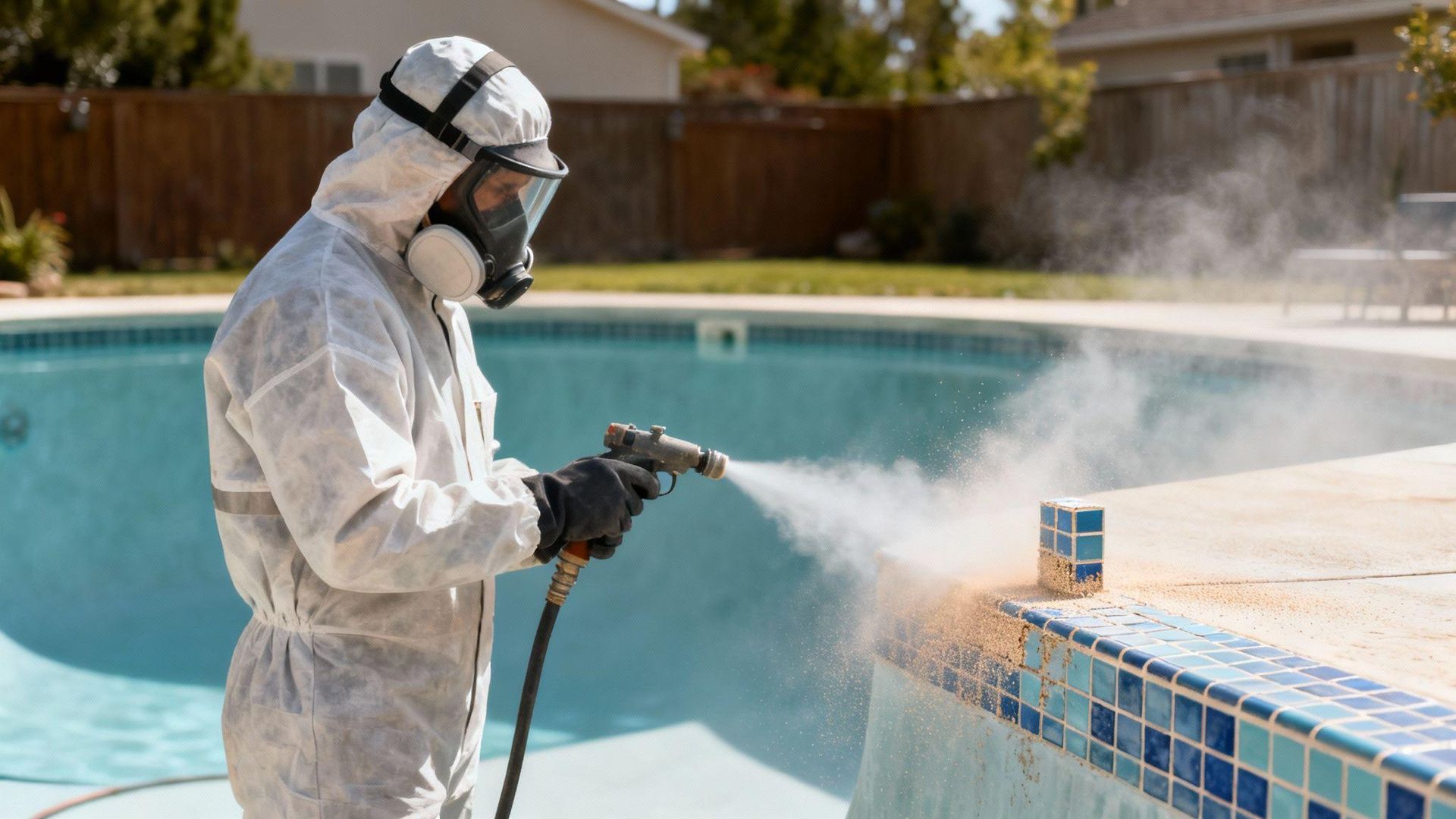
Work in small sections. Wear appropriate gloves and eye protection as recommended by the product label. Keep children and pets away from the work area. Have a rinse hose ready so you can control dwell time. If you are cleaning a spa spillway or raised wall, plan where rinse water will go so it does not run across sensitive stone or landscaping.
For contractors, this setup step is how you avoid uneven results. The most common reason waterline cleaning looks patchy is uncontrolled dwell time. One section gets 30 seconds, another gets five minutes. Working in sections keeps results consistent.
Step 1: Prep with LayorCare Pre Treat Cleaner
Before you attack scale, remove oils and grime that can block the remover from contacting minerals. LayorCare recommends Pre Treat Cleaner for surface preparation.
- Rinse the area to remove loose debris.
- Apply Pre Treat Cleaner as directed on the label.
- Agitate lightly with a soft brush or non scratch pad that matches the surface.
- Rinse thoroughly to remove residue.
This step often makes the difference between a quick, clean reaction and a slow, frustrating process. It is especially important on the waterline where sunscreen, body oils, and airborne dust stick to tile and trap minerals.
Step 2: Apply LayorCare Heavy Calcium Releaser directly to deposits
Apply the heavy calcium remover for pool tile to the affected area. Focus on the waterline band, the coping edge where deposits build, and spa surfaces that see frequent wet and dry cycling. Do not flood the entire deck or stone coping. Target the deposits so the product works where it is needed.
- Apply evenly across the scaled area.
- Allow dwell time as directed so the product can loosen and dissolve scale.
- Keep the surface controlled and do not let the product dry unless the label specifically allows it.
Step 3: Agitate gently to lift softened scale
Use the least abrasive tool that still removes loosened minerals. For many glazed tiles, a non scratch pad is effective. For grout lines, a soft bristle brush can remove scale without digging into the grout. On natural stone coping, use extra caution. Stone can be more sensitive to both chemicals and abrasion.
Tip for homeowners: if you feel tempted to scrub harder, pause and reapply or extend dwell time within label directions. Aggressive scrubbing is how surfaces get scratched, which creates permanent haze that cannot be “cleaned off.”
Step 4: Rinse thoroughly and evaluate when dry
Rinse thoroughly and inspect the area. Some deposits look gone when wet but reappear when dry. If the haze returns when dry, that indicates remaining mineral scale. Repeat the process in another controlled pass rather than switching to aggressive tools.
For pool service contractors, document before and after sections. This helps customers understand how mineral thickness varies and why a second pass may be needed on corners, spillways, and spa walls.
Step 5: Restore and protect with LayorCare’s surface care system
In states with high calcium water, the real win is not just cleaning once. It is preventing fast redepositing. LayorCare offers a system designed to clean, treat, and protect:
- TR3 Pool Tile Sealer for restoring shine and clarity on tile and creating a protective barrier.
- Cal Block Multi Surface Protectant to help prevent future calcium redepositing on treated surfaces.
- Neutral Seal and Wet Look Seal for longer term surface protection on appropriate patio and hardscape surfaces.
When homeowners search “pool tile calcium cleaner” they often want the immediate fix. When contractors build a program, they want the long term result. A sealer and protectant strategy bridges both goals.
Is Heavy Calcium Remover Safe for Pool Tile, Natural Stone, Vinyl Liners, and Coping?
Direct answer: Heavy calcium remover can be safe on many pool surfaces when the formula is designed for pool finishes and you follow the instructions. The keys are: test a small area, control dwell time, avoid abrasive tools, and rinse well. Safety varies by surface type, so the best approach is to match product and technique to the material.
Pool tile and grout (ceramic and porcelain)
Most waterline tile is durable, but grout and decorative glazes vary. A purpose built pool tile calcium cleaner helps reduce the need for harsh abrasion. LayorCare Heavy Calcium Releaser is positioned as surface safe and effective for heavy mineral deposits when used as directed, which is critical for protecting tile sheen and grout lines.
In regions like Arizona and Nevada, tile haze is often repeated year after year. That repeated cleaning makes it even more important to use a method that does not slowly dull the tile. Long term clarity depends on dissolving scale rather than sanding it away through repeated aggressive scrubbing.
Natural stone coping and spillways
Travertine, limestone, and other stones are more sensitive. The primary risks are etching, color change, and uneven appearance. Keep product application targeted to deposits rather than soaking broad stone areas. Rinse thoroughly. If you have concerns about your stone type or prior sealer, consider professional guidance.
After scale is removed, protecting stone matters. LayorCare offers Neutral Seal and Wet Look Seal options for long term surface protection on appropriate hardscape surfaces. This helps reduce future deposits on coping where splash and evaporation are constant.
Vinyl liners and vinyl surfaces
Calcium can form on vinyl liners and steps, especially in hard water regions. The challenge is removing deposits without rough pads that scratch or tear vinyl. Choose a product positioned for vinyl safety, test a small spot, and use gentle agitation. LayorCare Heavy Calcium Releaser is positioned as safe for use on vinyl liners when used properly.
Impact on pool water pH levels
Homeowners often ask whether using a heavy calcium remover will create a pH problem. If you apply a surface cleaner correctly and manage rinsing, you limit interaction with the full pool water volume. LayorCare positions Heavy Calcium Releaser as not affecting pool pH levels when used as directed, which is an important benefit for homeowners who want to remove haze without needing to chase water chemistry afterward.
How to Prevent Calcium Buildup From Coming Back After Cleaning
Direct answer: Calcium returns when water stays scale forming and surfaces are unprotected. Prevention requires balanced water, early maintenance, and surface protection that reduces mineral bonding. In high calcium regions, protection is not optional if you want results that last.
1) Control the conditions that create scale
Calcium buildup is influenced by calcium hardness, pH, alkalinity, temperature, and evaporation. In hot regions like Arizona, Nevada, and parts of Texas, evaporation and constant top offs drive CH higher over time. In Florida, heat and humidity still create strong scaling pressure, especially in pools that see frequent refills and high sanitizer use.
If you are a homeowner, use consistent testing and keep pH and alkalinity in a range that reduces scaling. If you are a contractor, look for patterns: repeated high pH, frequent aeration from water features, and high evaporation. Those patterns explain why one pool scales faster than another even in the same city.
2) Treat haze early before it becomes heavy deposits
The easiest calcium deposits to remove are the ones that have not fully hardened. If you can wipe a haze line with a damp cloth and it feels slightly rough, you are in the early stage. If it feels like sandpaper or you see thick crust, you are in the heavy stage. Early treatment saves time and reduces risk of surface damage.
3) Use LayorCare’s system approach for longer lasting results
In hard water states, a single cleaning rarely solves the root issue. LayorCare Pool and Patio Protection offers a system intended to move you from “remove and repeat” to “remove, protect, and maintain.” The core components include:
- Pre Treat Cleaner to remove oils so mineral removers work faster and more evenly.
- Heavy Calcium Releaser to dissolve stubborn mineral deposits and remove white haze on pool tile.
- TR3 Pool Tile Sealer to restore clarity and add a protective barrier on tile.
- Cal Block Multi Surface Protectant to help prevent calcium from redepositing and bonding quickly.
For contractors, this system approach also supports a higher value service offer. You are not just cleaning. You are delivering a longer lasting result and a plan to keep it that way.
4) Reduce waterline exposure and deposition triggers
Waterline scale is driven by wet and dry cycling. Simple habits can help: keep the waterline stable, address leaks that force frequent refills, and routinely wipe the waterline after heavy swimmer loads. Pools with spillovers and water features benefit from more frequent attention at those high deposition zones.
When to Call a Pool Service Professional vs Handle Calcium Removal Yourself
Direct answer: DIY calcium removal is reasonable when scale is light to moderate and you can safely reach the waterline. Call a professional when deposits are thick, likely calcium silicate, spread across large stone areas, or when you want restoration plus sealing and protectant application for long term protection.
DIY is a good fit when
- The white haze on pool tile is light to moderate.
- You can access the waterline and spa surfaces safely.
- You are committed to following a step by step method and working in sections.
- You want a reliable heavy calcium remover for pool tile with a prevention plan.
Call a professional when
- Scale is thick, glassy, and likely calcium silicate.
- Deposits cover large areas of natural stone coping or spillways.
- Your pool has glass tile, specialty finishes, or unknown materials.
- Prior cleaning attempts created dull spots, etching, or uneven appearance.
- You want a complete treatment, including sealing and protectant for long term results.
FAQ
What is the best product to remove calcium buildup from pool tile?
A purpose built heavy calcium remover for pool tile is typically the best option for stubborn deposits. LayorCare Heavy Calcium Releaser is positioned as a professional strength solution for heavy haze and scale.
Will heavy calcium remover affect my pool water chemistry or pH?
When used correctly on surfaces and rinsed as directed, the goal is to avoid disrupting water balance. LayorCare positions Heavy Calcium Releaser as not affecting pool pH levels when used as directed.
Is calcium remover safe to use on natural stone, travertine, or glass tile?
Safety depends on the surface and the product. Always test a small area, control dwell time, and use gentle tools. For high value stone or glass tile, consider professional help if you are unsure.
How long does it take for heavy calcium remover to work on pool tile?
Light haze can improve quickly. Heavy crust can take longer and may require a second pass. Always follow label instructions for dwell time and rinsing.
Can I use calcium remover on a vinyl pool liner?
Yes, but vinyl requires extra caution. Test first and avoid abrasive pads. LayorCare Heavy Calcium Releaser is positioned as safe for vinyl liners when used properly.
What is the difference between calcium carbonate and calcium silicate on pool tile?
Calcium carbonate is usually a chalky haze or crust that is easier to dissolve. Calcium silicate is harder, more glassy, and often needs a stronger, purpose built removal approach.
How often should I treat my pool tile for calcium buildup?
In hard water regions, treat early when haze appears instead of waiting for thick deposits. Frequency depends on evaporation, refill rate, and chemistry stability.
Can I apply pool tile sealer after using a calcium remover?
Yes. After thorough rinsing and drying, sealing helps protect the surface. LayorCare TR3 Pool Tile Sealer is designed to restore shine and clarity and add a protective barrier.
Why does calcium keep coming back on my pool tile after cleaning?
Calcium returns when water remains scale forming and surfaces are unprotected. Balanced chemistry plus Cal Block Multi Surface Protectant can help reduce redepositing.
Is LayorCare Heavy Calcium Releaser safe for use around children and pets?
Keep children and pets away during application and until the area is rinsed and dry. Follow all label directions for handling, storage, and ventilation.
Conclusion and next steps
White haze and stubborn calcium buildup on pool tile, coping, spa walls, and waterline surfaces require more than a quick scrub. In high calcium water regions across the United States, mineral scale continues to form unless it is removed with a professional strength calcium remover and followed by a protection plan. A purpose built heavy calcium remover for pool tile dissolves deposits safely and efficiently, which helps you avoid surface damage and repeated frustration. LayorCare’s complete system includes Heavy Calcium Releaser for dissolving stubborn mineral deposits, Pre Treat Cleaner for surface preparation, TR3 Pool Tile Sealer for restoring shine and clarity, and Cal Block Multi Surface Protectant for preventing future calcium redepositing. For long term surface protection, Neutral Seal and Wet Look Seal extend protection to appropriate patio and hardscape areas. Every LayorCare product is backed by a 100% satisfaction guarantee , making it risk free to try a system designed for homeowners and trusted by professionals. Shop the full lineup at store.layorcare.com or contact LayorCare directly at Info@LayorCare.com or 480-237-9363 to find the right solution for your pool and patio surfaces.
Recent Posts