Calcium Carbonate vs. Silicate: Removal Guide
Not all calcium buildup on pool tile and coping is the same, and treating every white deposit like “typical scale” is one of the fastest ways to waste time and damage surfaces. Calcium carbonate and calcium silicate are two chemically distinct forms of mineral scaling that form under different water conditions, look slightly different on pool tile and natural stone, and require different removal approaches. Misidentifying the deposit type is a common and costly mistake for homeowners and even some pool service professionals, especially in hard water regions like Arizona, California, Nevada, Texas, and Florida where scaling pressure is constant. The single most important step for a clean, damage free result is correctly identifying whether you are dealing with calcium carbonate or calcium silicate before choosing a product or method. The wrong approach on the wrong deposit can etch tile, weaken grout, discolor stone coping, and leave surfaces looking worse than before. This guide explains how to tell the difference, how to remove each type safely, and how to prevent both from coming back.
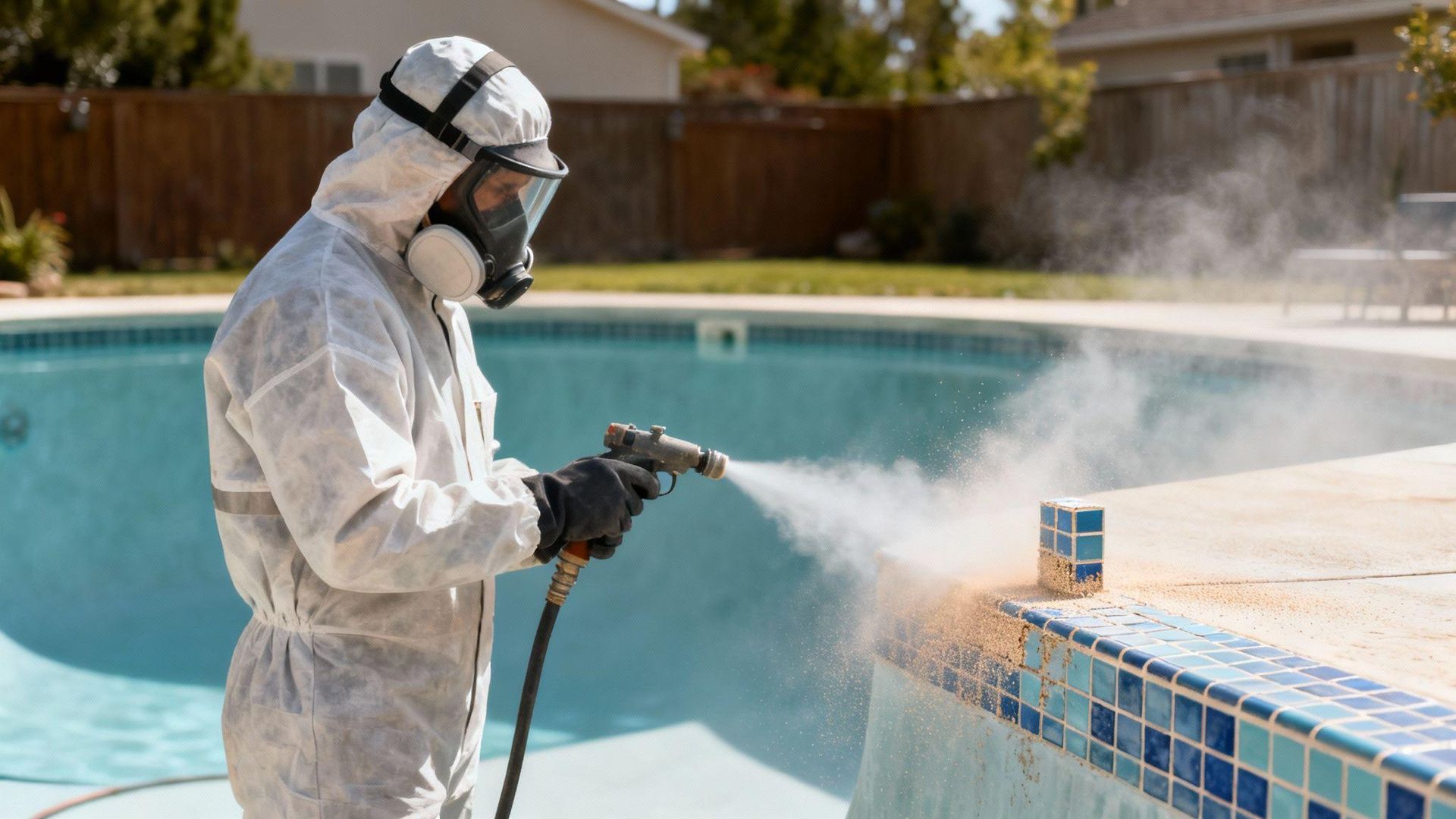
Table of Contents
- What Is Calcium Carbonate Scaling and How Does It Form?
- What Is Calcium Silicate Scaling and Why Is It Harder?
- How to Tell the Difference on Your Pool
- How to Remove Calcium Carbonate Deposits
- How to Remove Calcium Silicate Deposits
- Which Surfaces Are Most Vulnerable?
- How to Prevent Both Types From Returning
What Is Calcium Carbonate Scaling and How Does It Form on Pool Tile?
Direct answer: Calcium carbonate scale is the most common cause of white deposits on pool tile. It forms when water becomes scale forming due to high calcium hardness, elevated pH, high alkalinity, warm temperatures, and evaporation. The minerals precipitate out of the water and bond to surfaces, especially at the waterline.
In the Southwest and other high evaporation markets, calcium hardness often rises over time because water evaporates but calcium stays behind. When you top off with hard water, the calcium concentration climbs again. Add aeration from spillways, bubblers, and spa jets, and pH can drift upward, which increases the likelihood of calcium carbonate forming on tile and coping.
Where calcium carbonate scale shows up first
- Waterline tile: Frequent wet and dry cycles leave minerals behind.
- Spa walls and spillover zones: Aeration and heat speed up scale formation.
- Corners and grout lines: Rougher texture traps minerals and oils.
- Coping edges: Splash out and evaporation create concentrated deposits.
What calcium carbonate often looks and feels like
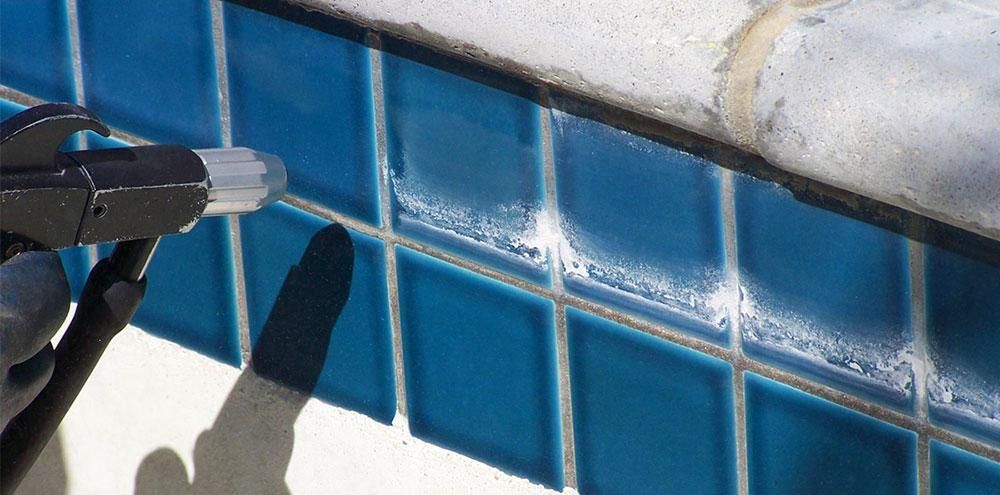
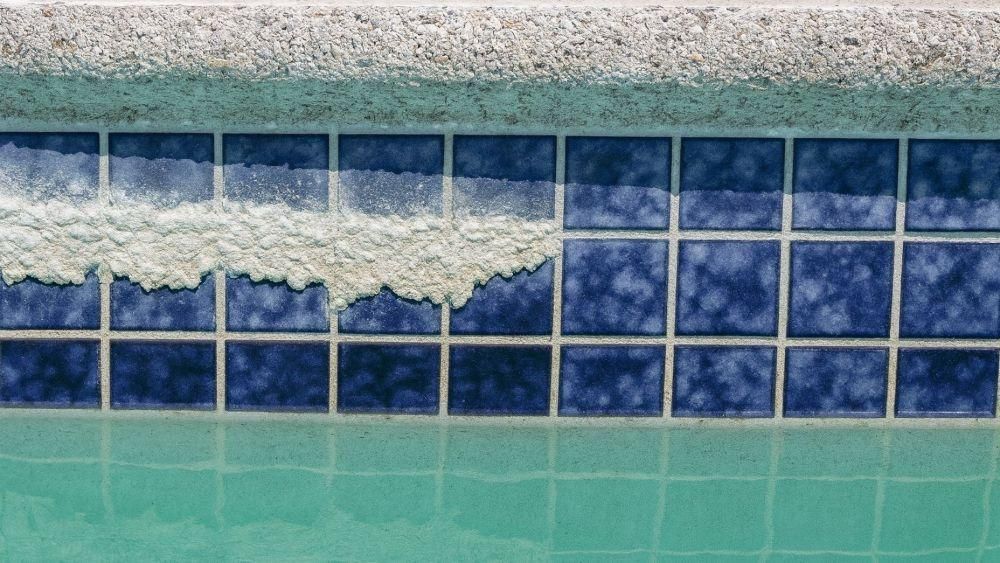
Calcium carbonate often appears as a chalky white haze on pool tile, a powdery film, or a crusty ring that can be scraped with a fingernail in lighter cases. On darker tile it can look like a cloudy band. On stone coping it can appear as a light, uneven whitening near the waterline where splash out dries.
What Is Calcium Silicate Scaling and Why Is It Harder to Remove?
Direct answer: Calcium silicate scale is typically harder, denser, and more strongly bonded than calcium carbonate. It often develops over longer periods and can resist mild acids and many standard pool store descalers, which is why calcium silicate removal in pools requires a different, more targeted approach.
Pool owners usually discover calcium silicate after they have tried a “typical” calcium remover and it barely changes the deposit. In hard water regions, carbonate scale can build up repeatedly, and over time conditions can favor tougher, more stubborn scaling layers. Calcium silicate deposits can look similar to carbonate at a glance, but the texture and hardness are usually the giveaway.
Common signs your scale may be calcium silicate
- The deposit feels very hard and “glassy” compared to chalky scale.
- It has been building for months or years , not weeks.
- Light DIY methods show little to no improvement .
- The deposit looks gray white or dense, not powdery.
Why the removal approach must be different
Because calcium silicate bonds more aggressively, overly aggressive removal methods often lead to damage. Scraping, grinding, or using harsh chemicals without a plan can scratch tile, gouge grout, and etch natural stone. A professional strength product plus controlled technique is the safer path.
How to Tell the Difference Between Calcium Carbonate and Calcium Silicate on Your Pool
Direct answer: The most reliable way to identify deposit type is to evaluate appearance, texture, hardness, how long it likely took to develop, and how it responds to a small, controlled test spot using a purpose built scale remover and gentle agitation.
Quick identification checklist (homeowner friendly)
- Texture: Carbonate is often chalky or powdery. Silicate is often hard and dense.
- Hardness: Carbonate may scrape slightly. Silicate usually resists scraping.
- Location: Both appear at waterline, but silicate often dominates in long neglected areas.
- History: If deposits have returned repeatedly for years, silicate risk increases.
Structured comparison: calcium carbonate vs calcium silicate
Use this side by side comparison to match what you see.
- How it forms and what causes it
- Calcium carbonate: Scale forming water balance, high pH and alkalinity, high calcium hardness, evaporation, aeration.
- Calcium silicate: Longer term scaling conditions, dense mineral bonding, often associated with stubborn, layered deposits.
- Visual appearance and texture on pool tile
- Calcium carbonate: White haze on pool tile, chalky film, powdery crust, patchy clouding.
- Calcium silicate: Gray white or bright white dense crust, harder “glassy” look, thick bonded deposits.
- How long it typically takes to develop
- Calcium carbonate: Can appear in weeks to months in hard water regions.
- Calcium silicate: Often develops over months to years as deposits harden and layer.
- Ease of removal
- Calcium carbonate: Moderate, responds to proper scale removers and technique.
- Calcium silicate: Difficult, often resists mild products and requires a professional strength approach.
- Recommended removal method and product type
- Calcium carbonate: Targeted heavy calcium remover for pool tile, gentle agitation, rinse, then protect.
- Calcium silicate: Professional grade remover with controlled dwell time, repeat passes as needed, then seal and protect.
- Risk of surface damage if left untreated
- Calcium carbonate: Can trap grime and lead to roughness, staining, and harder deposits over time.
- Calcium silicate: Hard bonded deposits can encourage aggressive removal attempts that damage surfaces.
- Prevention approach after removal
- Calcium carbonate: Balance water, protect waterline surfaces, reduce redepositing.
- Calcium silicate: Same prevention fundamentals, but protection and regular maintenance are even more critical.
Comparison: DIY methods vs pool store descalers vs pro-grade removal
Goal: show which approach fits which deposit type so you do not under treat silicate or over treat carbonate.
- White vinegar and common DIY methods
- Removal strength on calcium carbonate: Low to moderate for light haze, often inconsistent.
- Removal strength on calcium silicate: Very low.
- Surface safety: Usually safe when mild and used carefully, but scrubbing can scratch surfaces.
- pH impact: Low if used sparingly out of water, but runoff can still affect chemistry.
- Ease of use: Easy to try, hard to complete on heavy deposits.
- Long term results: Often temporary, scale returns quickly if unprotected.
- Standard pool store descalers
- Removal strength on calcium carbonate: Moderate on light to medium scale.
- Removal strength on calcium silicate: Variable, often limited on dense deposits.
- Surface safety: Varies by product and surface, caution on natural stone and grout.
- pH impact: Can be meaningful if large amounts enter pool water.
- Ease of use: Often straightforward, but may require repeated treatments.
- Long term results: Better than DIY when matched correctly, still needs protection steps.
- LayorCare Heavy Calcium Releaser pool tile system
- Removal strength on calcium carbonate: Designed for stubborn mineral deposits and white haze on pool tile.
- Removal strength on calcium silicate: Positioned for tough deposits when used with correct technique and repeat passes as needed.
- Surface safety: Positioned as safe for pool tile, natural stone, travertine, coping, spa surfaces, and vinyl liners when used as directed.
- pH impact: Positioned to not affect pool pH levels when used as directed.
- Ease of use: Contractor efficient and homeowner usable with a step based process.
- Long term results: Strongest when paired with Pre Treat Cleaner, TR3 Pool Tile Sealer, and Cal Block Multi Surface Protectant.
How to Remove Calcium Carbonate Deposits from Pool Tile, Coping, and Spa Surfaces
Direct answer: Calcium carbonate removal is typically achieved with a purpose built heavy calcium remover for pool tile applied in controlled sections, followed by gentle agitation and thorough rinsing. The goal is to dissolve and lift the mineral scale without scratching tile or etching stone.
Step by step approach (carbonate focused)
- Prep first: Remove oils and grime so the remover contacts minerals. LayorCare recommends Pre Treat Cleaner for surface preparation before sealing and protection steps.
- Apply remover to deposits: Use a professional grade product designed for mineral scale. LayorCare positions Heavy Calcium Releaser as a professional strength option for pool tile and coping deposits.
- Allow controlled dwell time: Follow label instructions. Work in small sections to keep results consistent.
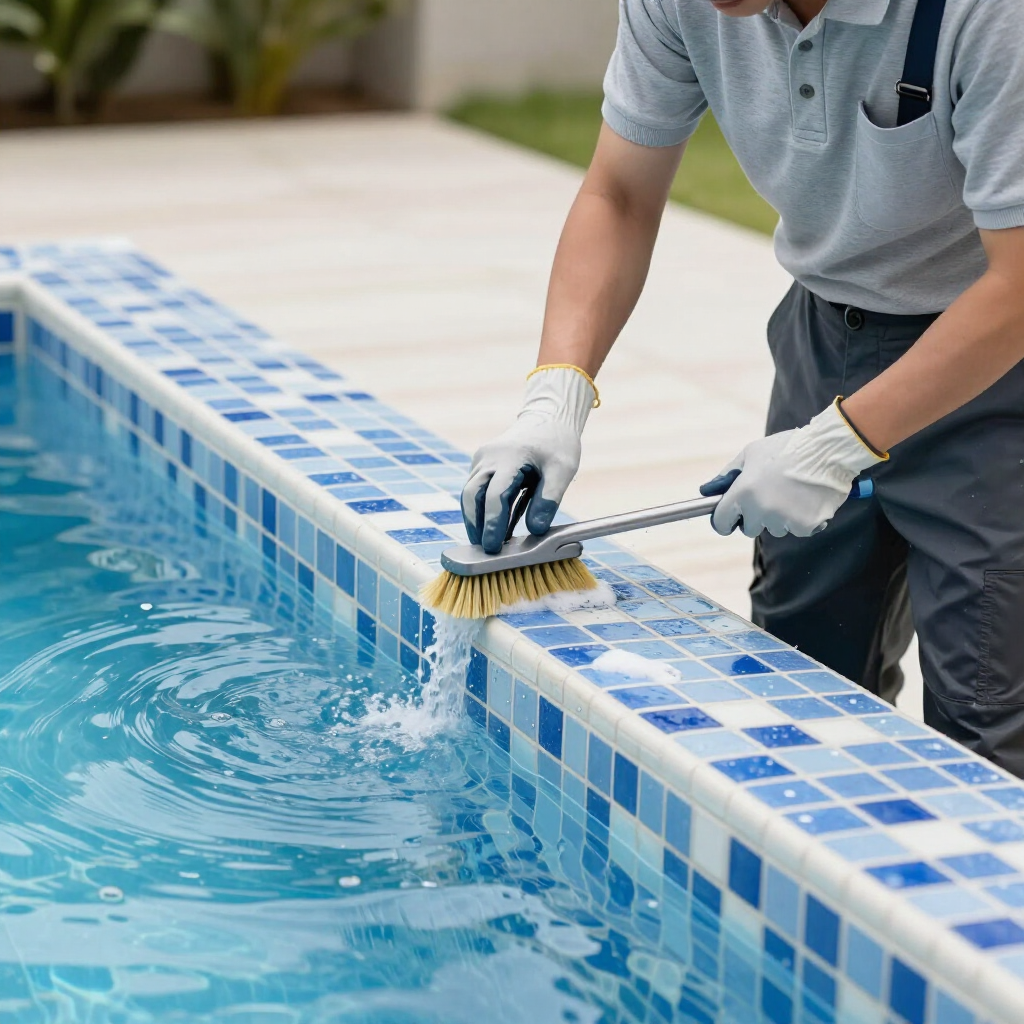
- Agitate gently: Use a non scratch pad or soft brush matched to the surface. Avoid aggressive abrasives that can create permanent dullness.
- Rinse thoroughly: Rinse the treated area and inspect when dry. Repeat a controlled pass if needed.
What not to do when removing carbonate scale
- Do not “sand” the scale off with abrasive pads on glossy tile.
- Do not treat stone coping like ceramic tile. Stone can etch more easily.
- Do not assume more scrubbing equals better results. It often equals more damage.
How to Remove Calcium Silicate Deposits: Why It Requires a Different Approach
Direct answer: Calcium silicate removal requires a more disciplined, professional approach because the deposits are harder and more strongly bonded. Success depends on using the right pro-grade chemistry, controlling dwell time, using the correct tools, and being willing to perform multiple passes instead of escalating abrasion.
Why “stronger scrubbing” is the wrong upgrade
When homeowners learn that calcium silicate is harder to remove, the instinct is to grab a pumice stone, scraper, or aggressive pad. This is one of the most common ways pool tile and grout get permanently damaged. The better upgrade is controlled chemistry plus time and technique. For many pools, the safest strategy is to use a professional grade remover and repeat the process in sections rather than forcing removal with brute tools.
Professional grade system approach for silicate scale
LayorCare Pool and Patio Protection is positioned as a complete professional grade system for cleaning, treating, and protecting pool tile and patio surfaces from calcium and mineral damage. In that system:
- Heavy Calcium Releaser is positioned as the professional strength calcium removal solution for stubborn carbonate and silicate mineral deposits.
- Pre Treat Cleaner supports more consistent removal and prepares surfaces for sealing.
- TR3 Pool Tile Sealer is used after cleaning to restore shine and surface clarity.
- Cal Block Multi Surface Protectant provides a long lasting nano barrier on sealed surfaces to help prevent mineral redepositing.
The core idea is simple: remove correctly, then protect. In hard water regions, protection is what helps reduce repeat scaling.
When to call a professional for silicate removal
- Deposits are thick, dense, and widespread across tile and stone.
- The pool has glass tile, specialty finishes, or valuable natural stone coping.
- Previous removal attempts left dullness, scratches, or etched stone.
- Access is unsafe without professional equipment or draining.
Which Surfaces Are Most Vulnerable to Each Type of Calcium Scaling?
Direct answer: Both types can form on most pool surfaces, but vulnerability depends on texture, porosity, and exposure to evaporation and aeration. Porous stone and grout tend to trap minerals and show deposits more quickly. Waterline zones scale faster than underwater tile because of constant drying cycles.
Surfaces that commonly show calcium carbonate scale
- Glazed ceramic and porcelain waterline tile
- Grout lines where texture traps minerals and oils
- Spa raised walls and spillover edges
- Coping near splash out
Surfaces where calcium silicate is most problematic
- Long neglected waterline tile with layered deposits
- Textured stone coping where deposits harden and bond
- Spa surfaces exposed to heat and aeration
- Rough grout and porous materials that hold minerals longer
Special note on vinyl liners
Vinyl liners can develop mineral deposits, but the removal method must be gentler. Avoid abrasive pads. LayorCare Heavy Calcium Releaser is positioned as safe for vinyl liners when used properly, which matters for homeowners who want results without risking liner damage.
How to Prevent Both Types of Calcium Scaling From Returning After Treatment
Direct answer: Prevention requires balanced water, early maintenance, and surface protection that reduces mineral bonding. In high calcium water regions, a “remove only” approach often leads to rapid redepositing at the waterline.
1) Reduce scale forming conditions
Hard water states often start with higher calcium hardness. Evaporation increases mineral concentration, and aeration can drive pH upward. Consistent testing and stable water balance reduce the pressure that forms both carbonate and silicate deposits. Contractors should pay extra attention to pools with heavy water features, spillovers, and frequent top offs.
2) Maintain the waterline before deposits harden
Light haze is easier to remove than hard scale. Regular maintenance in warm months helps prevent carbonate deposits from hardening into more stubborn layers. If you see white deposits on pool tile starting to form, treat early with a surface safe product instead of waiting for heavy buildup.
3) Protect surfaces after cleaning
LayorCare’s system is designed to help pool owners and contractors move from “clean and repeat” to “clean and protect.” After removal:
- Use TR3 Pool Tile Sealer to restore shine and surface clarity on tile after cleaning.
- Apply Cal Block Multi Surface Protectant to create a long lasting nano barrier on sealed surfaces that helps prevent mineral redepositing.
In hard water regions, sealing and protection are often what determine how long results last.
FAQ (10 questions)
What is the difference between calcium carbonate and calcium silicate on pool tile?
Carbonate scale is usually chalkier and forms faster under scale-forming water balance. Silicate scale is denser, harder, and typically more difficult to remove.
How can I tell which type of calcium deposit is on my pool tile at home?
Check the texture and hardness. Carbonate deposits are often powdery or chalky, while silicate deposits are usually hard and glassy. A small, controlled test spot using the right product and gentle agitation can help confirm the deposit type.
Why is calcium silicate harder to remove than calcium carbonate?
Calcium silicate deposits tend to be more strongly bonded and denser than calcium carbonate, so mild removers and DIY methods often do not dissolve them effectively.
Can I use the same product to remove both calcium carbonate and calcium silicate?
Some professional-grade products are designed to address both types of deposits when used correctly. LayorCare Heavy Calcium Releaser is positioned for stubborn carbonate and silicate mineral deposits, with results depending on proper technique and repeat applications as needed.
Will calcium remover damage my pool tile, grout, or natural stone?
It can if the product is too aggressive or left on the surface for too long. Always test a small, inconspicuous area first, follow the manufacturer's directions, and use gentle tools, especially on travertine and other porous natural stone.
Does LayorCare Heavy Calcium Releaser work on calcium silicate deposits?
LayorCare positions Heavy Calcium Releaser as a professional-strength solution for stubborn calcium carbonate and calcium silicate deposits when used according to the product instructions.
How long has calcium silicate been forming if it is very hard to remove?
Calcium silicate deposits often develop over months or even years. They are commonly associated with long-term, layered mineral scaling that becomes increasingly dense over time.
Can I prevent calcium silicate from forming after I clean my pool tile?
Yes. You can reduce the risk by maintaining proper water balance, cleaning the waterline regularly, and using sealers and surface protectants that help reduce mineral bonding. Protection is especially important in hard water regions.
Is it safe to use a calcium remover near pool water without draining the pool?
Cleaning near the waterline is common, but you should minimize product runoff into the pool and always follow the product directions. If you are concerned about water chemistry or sensitive surfaces, consult a pool professional.
When should I hire a professional instead of removing calcium deposits myself?
Consider hiring a professional when deposits are thick, likely to be calcium silicate, located on sensitive surfaces such as glass tile or natural stone, or when previous removal attempts have caused scratches or etching. Professionals are also recommended when access is difficult or restoration-quality results are needed.
Conclusion and CTA
Understanding calcium carbonate vs calcium silicate pool tile deposits is essential before attempting any descaling project. These deposits form differently, look different when you know what to look for, and respond to different removal strategies. Using the wrong method on the wrong deposit type risks permanent damage, including etched tile, weakened grout, and discolored stone coping, which is far more expensive to repair than the original scaling. A reliable solution starts with correct identification, then a surface safe, professional grade removal process, followed by protection that prevents fast redepositing in hard water regions. LayorCare Pool and Patio Protection offers a complete system designed for accurate, effective, and surface safe results, including Heavy Calcium Releaser , Pre Treat Cleaner , TR3 Pool Tile Sealer , and Cal Block Multi Surface Protectant . Every LayorCare product is backed by a 100% satisfaction guarantee , and the brand is positioned as pro grade and eco safe, trusted by pool professionals across the country. Shop the full lineup at store.layorcare.com or contact LayorCare at Info@LayorCare.com or 480-237-9363 for guidance on the right products for your specific calcium removal and surface protection needs.
Recent Posts